Today, Dec. 5, 2025, is a day of celebration for members of the Don Marquis Double Scotch and Prohibition Society! Today is Repeal Day, marking the 93rd anniversary of the repeal of the 18th Amendment to the U.S. Constitution and the end of Prohibition.
Don jokingly referred to the 18th Amendment as the 18th Commandment, a nod to the moral and religious fervor that brought Prohibition to our country like a scourge of locusts. The amendment was ratified in 1919 and effectively prohibited the sale and consumption of alcoholic beverages, but in doing so it created a nation of bootleggers and speakeasies. The 21st Amendment, ratified on Dec. 5, 1933, finally brought an end to the failed “Great Experiment.”
 Don wasn’t the only writer to poke fun at Prohibition, but no one did it with a sharper wit than Don and his fictional friend Clem Hawley, a genial drunk who gained international fame as the Old Soak. In the opening chapter of his 1921 book “The Old Soak and Hail and Farewell,” Don introduces Clem as a forlorn champion of all that is decent, true and 80 proof:
“I see that some persons think there is still hope for a liberal interpretation of the law so that beer and light wines may be sold,” said we.
“Hope,” said he, moodily, “is a fine thing, but it don’t gurgle none when you pour it out of a bottle. Hope is all right, and so is Faith . . . but what I would like to see is a little Charity.
“As far as Hope is concerned, I’d rather have Despair combined with a case of Bourbon liquor than all the Hope in the world by itself.”
Marquis introduced the Old Soak in his Sun Dial column in 1914, when the Prohibition movement was picking up steam. His 1921 collection of Old Soak stories was followed in August 1922 with a hit Broadway comedy, “The Old Soak,” based on Clem’s boozy adventures.
The play had a corny and predictable plot — lazy, good-for-nothing husband agrees to leave home in disgrace after the family nest egg vanishes, then confronts the real villain and saves the day — but critics applauded Marquis’ deft writing. Alexander Woollcott, in The New York Times, called the play “gorgeously entertaining,” and drama critic Burns Mantle named “The Old Soak” one of the top 10 productions of the 1922-23 season.
Mantle said Clem Hawley was “representative of all the genial alcoholics, all the winning failures, all the domestic derelicts with weak characters but good hearts, who have both blessed and infested the world from the days of Bacchus to those of Volstead.”
“The Old Soak” ran for 421 performances at New York’s Plymouth Theatre before embarking on three simultaneous national tours. In 1926, Universal Pictures released “The Old Soak” as a silent movie, and in 1937 Clem reappeared in an MGM talkie, “Good Old Soak,” starring the aptly named Wallace Beery.
Today, we fondly recall the Old Soak, and Repeal Day, with a glass or three of our favorite beverage. Cheers, friends! Slainte! Prost! Salud! Na zdravie! L’chaim! Cin cin!
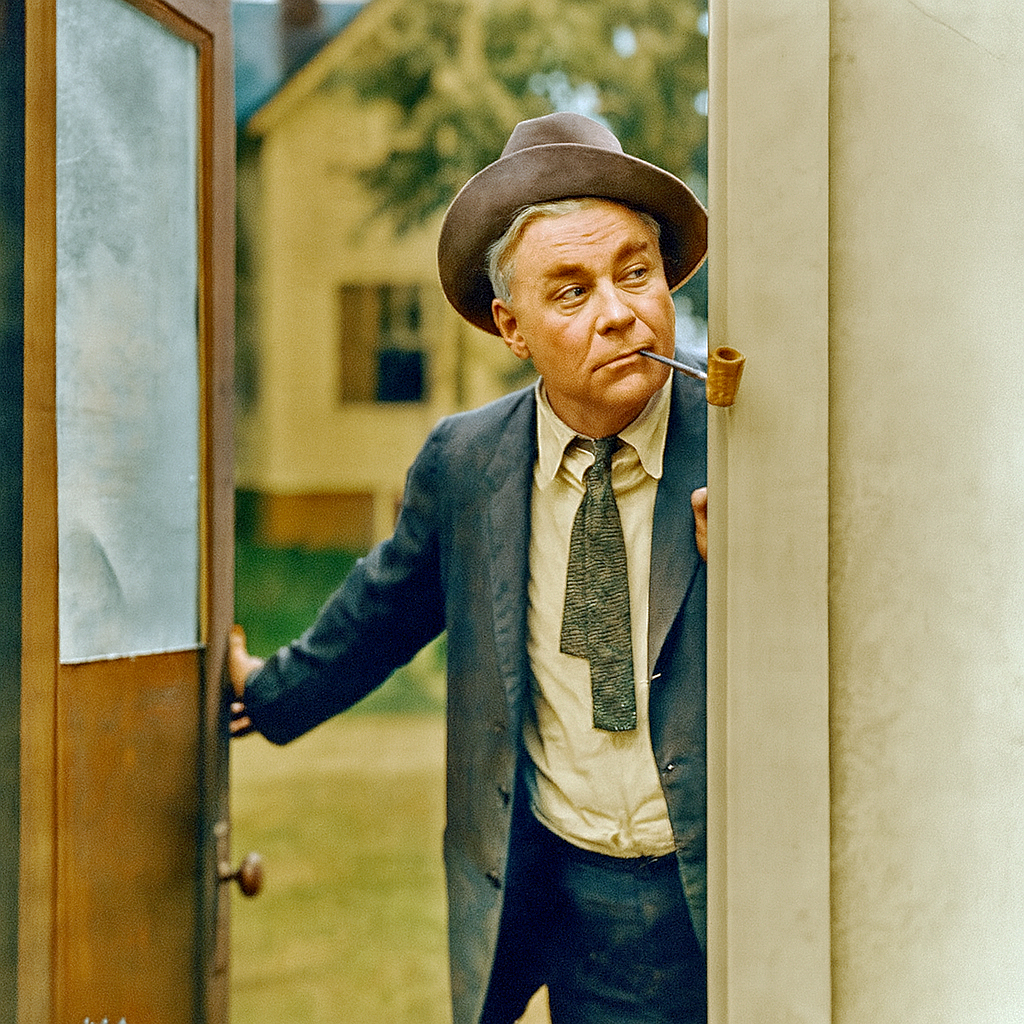
(The accompanying photo, by the way, is a first-ever colorized version of a photo of Don himself in the role of the Old Soak, in a 1926 summer-stock performance in Showhegan, Maine.)